Uber Boat By Thames Clippers Case StudyKeeping London Connected

The Client

Uber Boat by Thames Clippers operate a fleet of passenger vessels along the River Thames, providing a unique and popular commuter and leisure service through central London.

On board, customers are offered a range of services with the option to make contactless payments for refreshments, merchandise and ticketing. However, the team had been experiencing intermittent cellular connectivity issues during journeys, which disrupted payment processing.

These issues were affecting both operational efficiency and the onboard customer experience, especially during busy periods.


The Challenge

Despite good overall mobile coverage in London, the Thames presents unique challenges.

Cellular Signal black spots were occurring at specific points along the route, particularly between high riverbank walls and infrastructure-heavy areas like tunnels and bridges.

These dropouts were time-dependent, with disruptions more frequent during peak travel hours. Contactless payments were failing intermittently, frustrating both crew and customers, leading to negative feedback and potential loss of revenue. The underlying issue wasn’t a complete lack of signal—it was inconsistent and unreliable coverage, which standard consumer devices could not fully detect or diagnose.

The Siretta Solution:

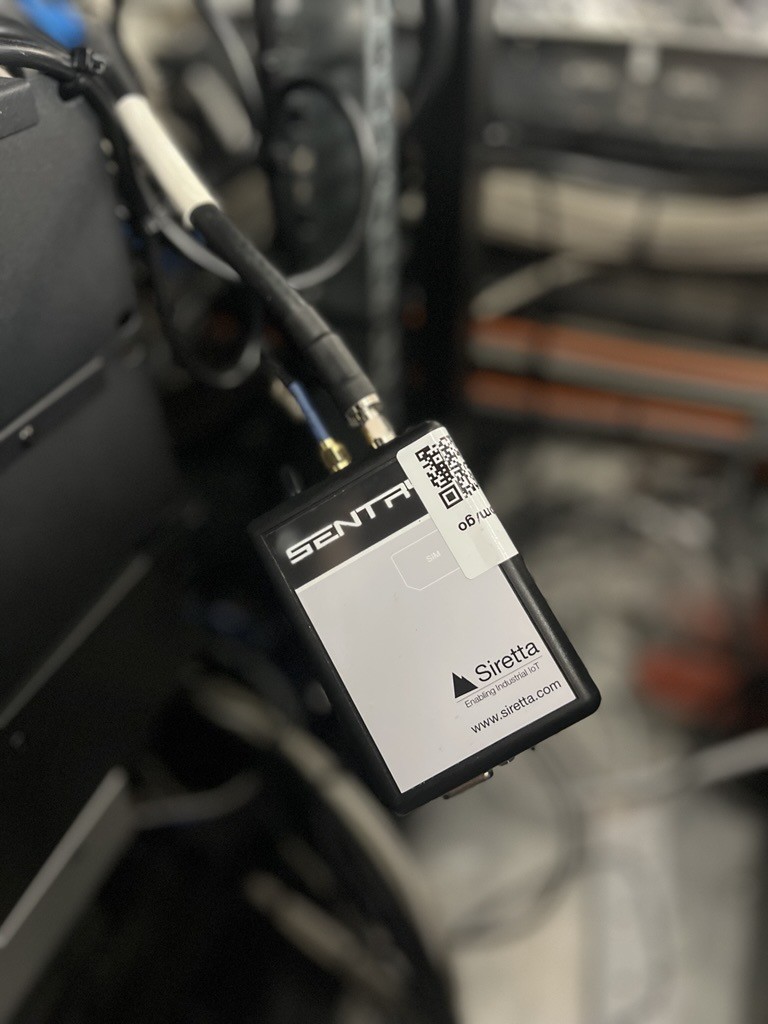
To help investigate and mitigate these issues, Siretta recommended deploying its SENTRY cellular signal and network performance analyser. The SENTRY was installed on the newly launched Mars Clipper – A Hunt Class Mk IV Catamaran.

One of the UK’s first hybrid high-speed passenger ferries with a capacity of 230 passengers and top speed of 32 knots, operating continuously 7 days a week collecting live network data during all journeys.

This included:

  • Cell tower handovers
  • Signal strength and quality
  • RSRP/RSRQ/SINR)
  • Network technology (4G/3G fallback)
  • SIM/network performance by operator.

This real-time monitoring approach offered granular insight into what the crew had previously experienced only as “unexplained dropouts”.

Key Findings

After several weeks of live monitoring, the SENTRY provided valuable and actionable data: Consistent dropout zones were identified and mapped, clearly highlighting cellular “dead spots” that aligned with staff-reported issues.

Tidal conditions were confirmed as a key influence: At low tide, the vessels sit lower on the water, reducing the line-of-sight to nearby cellular towers due to high embankments.

This significantly impacts signal quality and increases packet loss during those conditions. Operator performance varied by location, with EE and VMO2 (Virgin Media O2) offering the most reliable service across the route.

Possible Recommended Actions & Optimisation

With these insights, Siretta worked with Uber Boat by Thames Clippers to propose a multi-pronged improvement strategy:

Raise the height of onboard antennas to improve signal reception during low tide, ensuring line-of-sight to cell towers remains above the riverbanks.

Upgrade to dual-SIM routers, with SIMs from both EE and VMO2. This would provide network redundancy and improve overall signal reliability.

Continue SENTRY monitoring post-implementation, to validate improvements and maintain visibility into network changes, such as cell tower reconfiguration.

blank
Before working with Siretta, we struggled with unreliable connectivity from our network provider. The SENTRY system has completely transformed that — giving us clear, data-driven insight into problem areas and enabling informed decisions to improve reliability for our crews and passengers. It’s taken us from guesswork to genuine understanding.
blank

 – Adam Minchella  Operations Lead, Uber Boat by Thames Clippers

Outcomes

The deployment of  the SENTRY has already delivered tangible ongoing insights:

Uber Boat by Thames Clippers now understand exactly where and why signal dropouts occur, rather than relying on assumptions or anecdotal reports.

The customer is empowered with the data needed to work with network providers, internal technical teams, and Siretta to drive a resolution.

Ongoing monitoring provides a data-driven roadmap for future upgrades, ensuring long-term service improvement.