

End-of-life (EOL) announcements are becoming more common across the cellular IoT market. As manufacturers rationalise portfolios, merge product lines or exit legacy technologies, many widely deployed modems are being discontinued — often while customer installations are still active in the field.
For system integrators, OEMs and asset owners, this creates a familiar problem: what happens when the modem your product relies on is no longer available?
Why IoT modems are being EOL’d
There are several industry-wide reasons behind the increase in modem EOL notices:
- Vendor consolidation following acquisitions and mergers
- Technology transitions, such as the move away from 2G/3G to LTE-based solutions
- Component availability and chipset lifecycle changes
- Rationalisation of overlapping product ranges
Manufacturers are understandably focused on future platforms, but this often leaves customers managing long-life deployments with suddenly unsupported hardware.
The real impact of EOL on deployed systems
An EOL modem doesn’t just affect procurement — it can trigger wider technical and commercial risk:
- Forced redesigns of certified products
- Re-testing and re-approval for regulated industries
- Firmware changes and new AT command sets
- Stock shortages for spares and replacements
- Unplanned costs and extended downtime
For applications with 5–10+ year lifecycles, these disruptions are far from trivial.
What to look for in an EOL replacement modem
When sourcing an alternative to an EOL’d modem, engineers typically prioritise:
- Form-factor compatibility (physical size, mounting, connectors)
- Interface continuity (RS232, RS485, USB, Ethernet)
- Network longevity (LTE Cat-1, LTE-M, NB-IoT rather than legacy 2G/3G)
- Minimal firmware changes
- Long-term availability commitments
The goal is simple: keep the existing system working with minimal redesign effort.
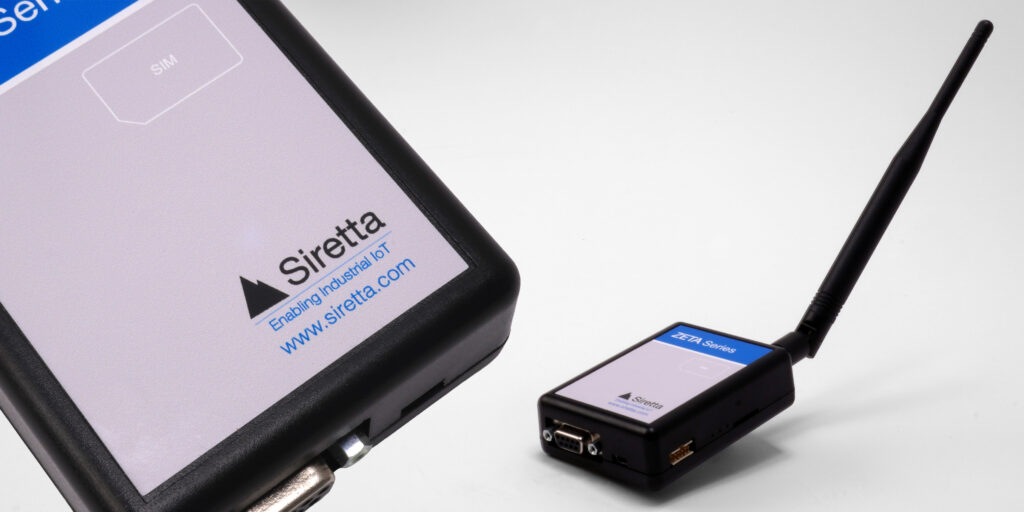
ZETA modems as a continuity option
For many applications, ZETA industrial cellular modems are used as a drop-in or low-impact replacement when legacy or discontinued devices are no longer available.
Key characteristics include:
- Industrial-grade design for long-term deployment
- Support for LTE Cat-1, Cat-4, LTE-M and NB-IoT, aligned with network longevity
- Common industrial interfaces (RS232)
- Ultra-Low power consumption ideal for low power applications
- Simple integration without proprietary software lock-in
- Reliable and dependable technical support
Rather than pushing customers into frequent platform changes, the focus is on continuity and longevity
Avoiding future EOL disruption
While EOLs can’t be eliminated entirely, they can be mitigated:
- Choose modem platforms with clear lifecycle visibility
- Avoid over-customised or proprietary device dependencies
- Standardise on widely supported cellular technologies
- Maintain second-source or alternative options early in the design phase
Planning for lifecycle stability at the outset significantly reduces long-term risk.
Final Thoughts
EOL announcements are an unavoidable part of the IoT industry, but they don’t have to mean forced redesigns or costly delays. By selecting industrial modems designed with longevity in mind, businesses can maintain continuity even as the wider market evolves.
For organisations facing discontinued modem platforms, ZETA remains a practical, available option — supporting modern cellular networks while keeping existing systems operational.
